Bavarian Mountain Hound
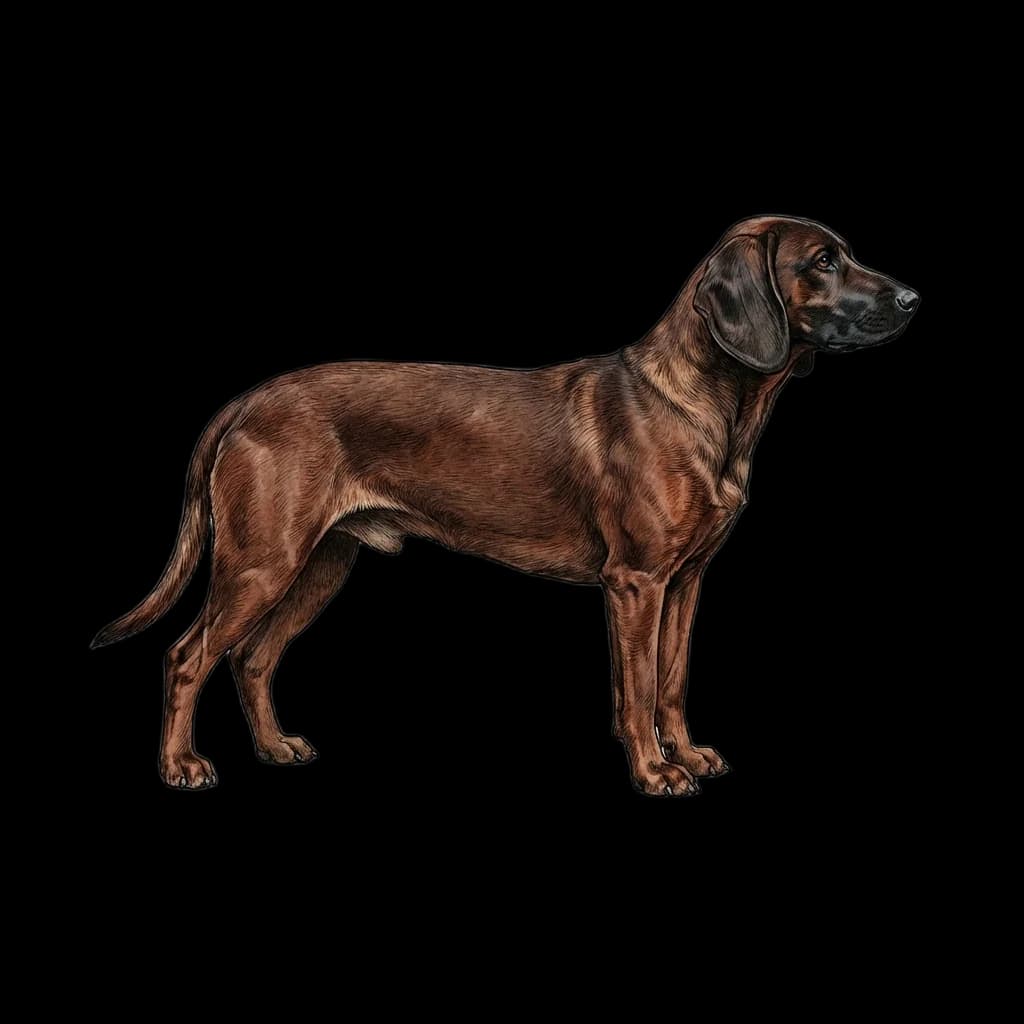
Tracking specialist and scenthound. Light and agile, bred for tracking wounded game.
The Bavarian Mountain Hound is a specialized tracking dog developed in Bavaria, Germany. The breed is lighter and more agile than its relative the Hanoverian Scenthound, and was bred to follow blood trails over demanding terrain.
Tracking is the dog's primary task. After a shot where there is uncertainty about the hit, an approved tracking dog with handler is called in to follow the trail. The Bavarian Mountain Hound has an exceptional ability to pick out the correct blood trail even many hours after the shot.
The breed works calmly and methodically on the trail. It follows with a low nose, focused and persistent, and can distinguish between different individuals' tracks. That ability is especially useful in areas with high game density where multiple animals have crossed the same area.
To become an approved tracking dog, the dog must pass a Schweiss test. The test evaluates the dog's ability to follow an artificial blood trail laid several hours earlier, and also assesses the dog's behavior when it finds the "game" (a skinned game part).
The temperament is sensitive and loyal. The Bavarian Mountain Hound bonds strongly with its handler and can be reserved toward strangers. It needs a calm, patient owner who understands the breed's nature. Harsh training works poorly. The breed responds best to positive reinforcement.
In Scandinavia, the breed is used primarily for tracking cervids: moose, red deer, roe deer, and wild reindeer. It is also effective on wild boar where that species occurs.
Access to approved tracking dogs is crucial for responsible big game hunting. All hunting teams should have an agreement with a tracking dog network or team before the hunt begins. Rules for mandatory tracking dogs vary between countries.