Stalking
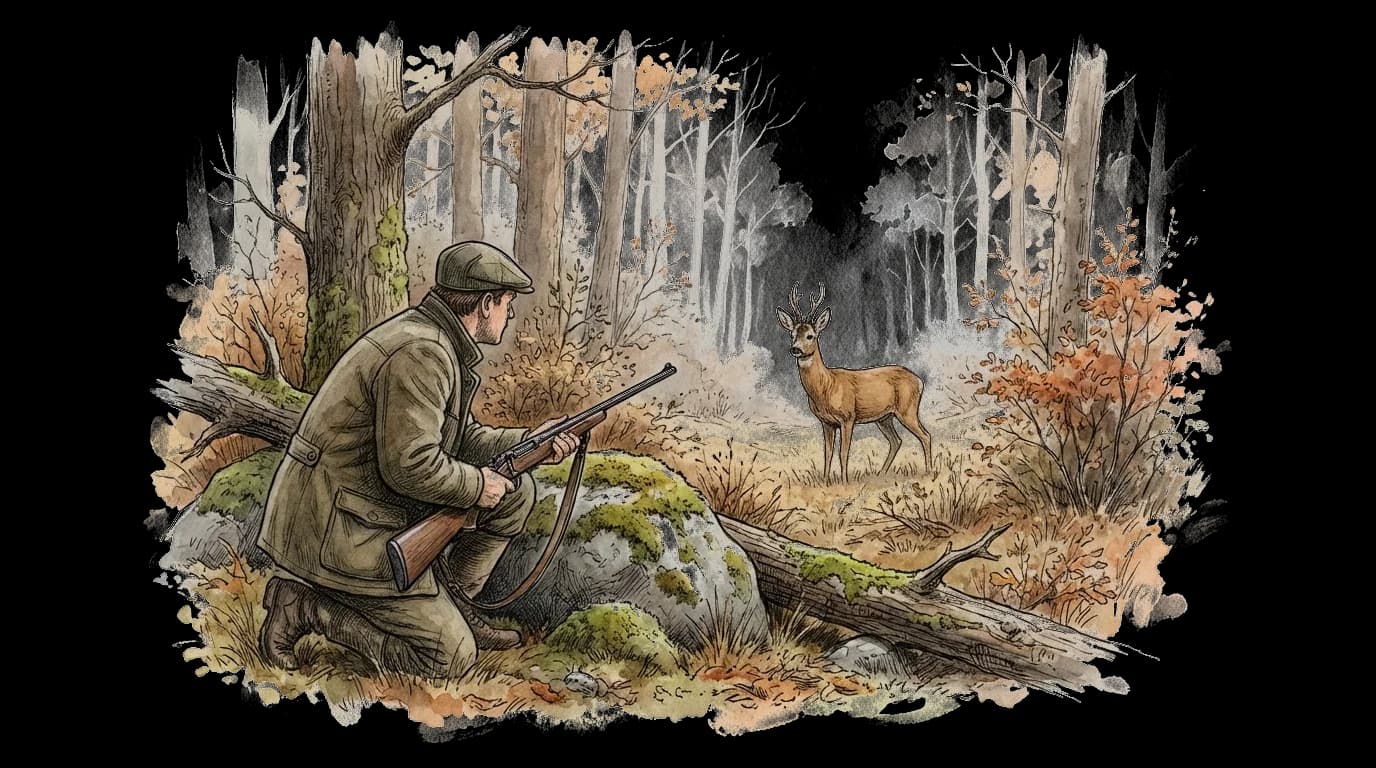
Stalking is a quiet, individual form of hunting where the hunter approaches game to within shooting range.
Stalking is hunting at its most fundamental. You are alone, moving slowly through the terrain, using senses and experience to locate and approach game. It requires patience, good fieldcraft, and the ability to read wind and terrain.
Everything revolves around the wind. You must always have it in your face or from the side. Game can smell you from several hundred meters away, and one shift in wind can ruin hours of work.
Move slowly. Stop often. Use your binoculars more than your feet. Most beginners make the mistake of walking too fast. A good stalking pace is perhaps 200 meters per hour in dense terrain.
Stalking red deer during the rut is particularly exciting. The stags are active and respond to calling. You can hear them roaring from a great distance and plan your approach based on the sound.
For moose, stalking works best early in the morning and late in the evening when the animals move between feeding and bedding areas. Bog edges and waterways are classic stalking areas.
Equipment should be light and quiet. Skip rustling clothes. Soft wool or fleece beats hardshell. Light backpack with the essentials: binoculars, rangefinder, knife, rope, and lunch.
Relevant Species


Find Hunting Land
Create a free account and find hunting land across Norway.
Related Hunting Methods
Driven hunt
Driven hunt is a team hunt where drivers push game toward posted hunters. Most commonly used for moose and red deer in Norway.
Calling
Calling uses sound to lure game to you. Most effective during the rut for deer and moose.
Stand hunting
Stand hunting means sitting still at a strategic point and waiting for game to come to you.