Hanoverian Scenthound
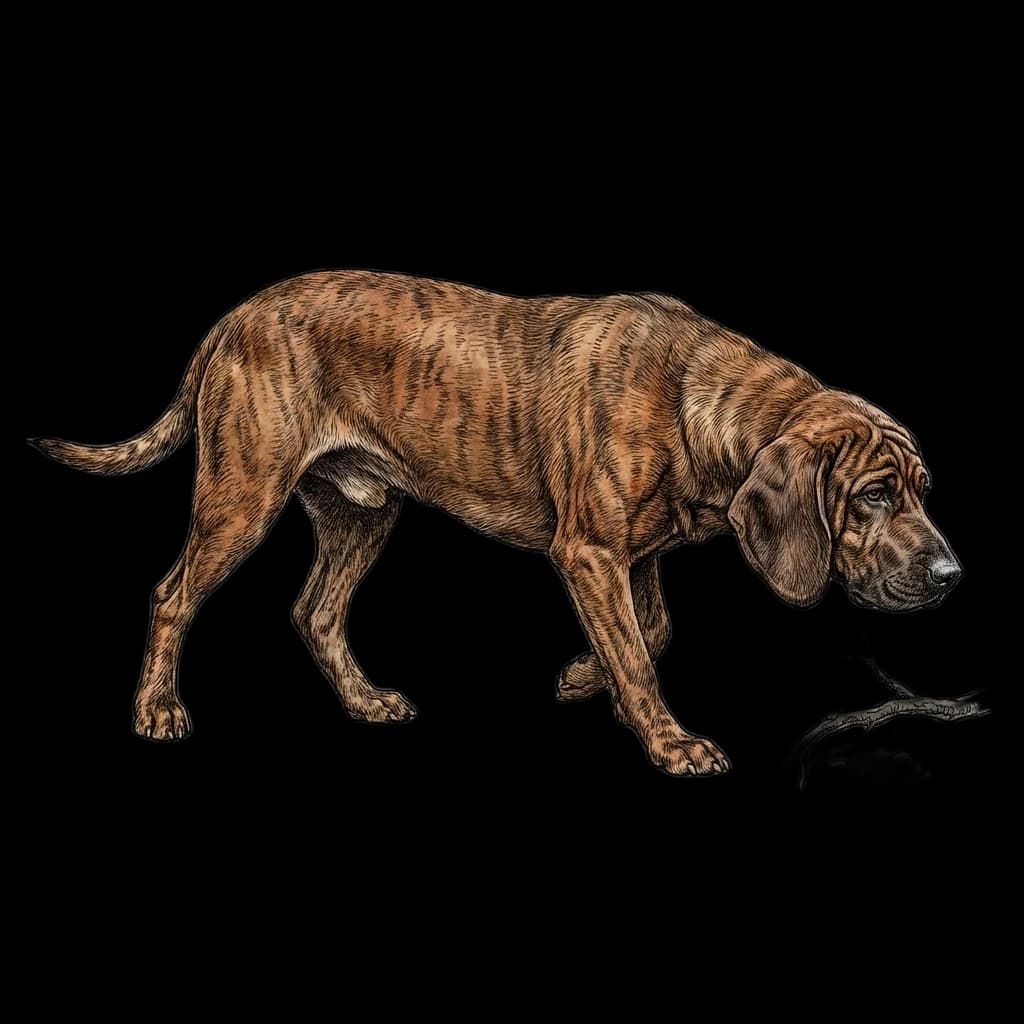
Heavier scenthound for tracking big game. Strong and enduring tracking dog.
The Hanoverian Scenthound (Hanoverian Schweisshund) is the oldest of the German scenthound breeds. It is heavier and more powerful than the Bavarian variant, and was originally developed for tracking big game such as deer and wild boar in Germany's large forests.
The breed is a dedicated tracking specialist. Its nose is outstanding, and the dog can follow blood trails that are over 24 hours old under difficult conditions. It works slowly, thoroughly, and systematically, and doesn't easily give up a trail.
The Hanoverian Scenthound is used in Scandinavia primarily for tracking moose and red deer. The heavier build provides endurance on long trails in heavy terrain, but makes it somewhat slower than the Bavarian breed in steep mountain terrain.
Training a tracking dog is a long-term project. The foundation is laid with track training on artificial blood trails of increasing difficulty. The puppy learns to follow blood drops with a low nose and is rewarded when it finds the game part at the end of the trail. Gradually, the trail's length, age, and complexity are increased.
The temperament is calm and stable, but with strong will. The breed is not a typical family dog. It requires an active owner with hunting interests. Without meaningful work, it can become destructive.
The Schweiss test is the formal requirement for approval as a tracking dog. The test varies somewhat between countries but always evaluates the dog's ability to follow an old blood trail over a specified distance. The dog's behavior and cooperation with the handler are also assessed.
Many tracking dog networks in Norway and Sweden use the Hanoverian Scenthound as their primary breed. Tracking is legally required for big game hunting in most Scandinavian countries, and the need for skilled tracking dog teams is significant.