Wounded game tracking
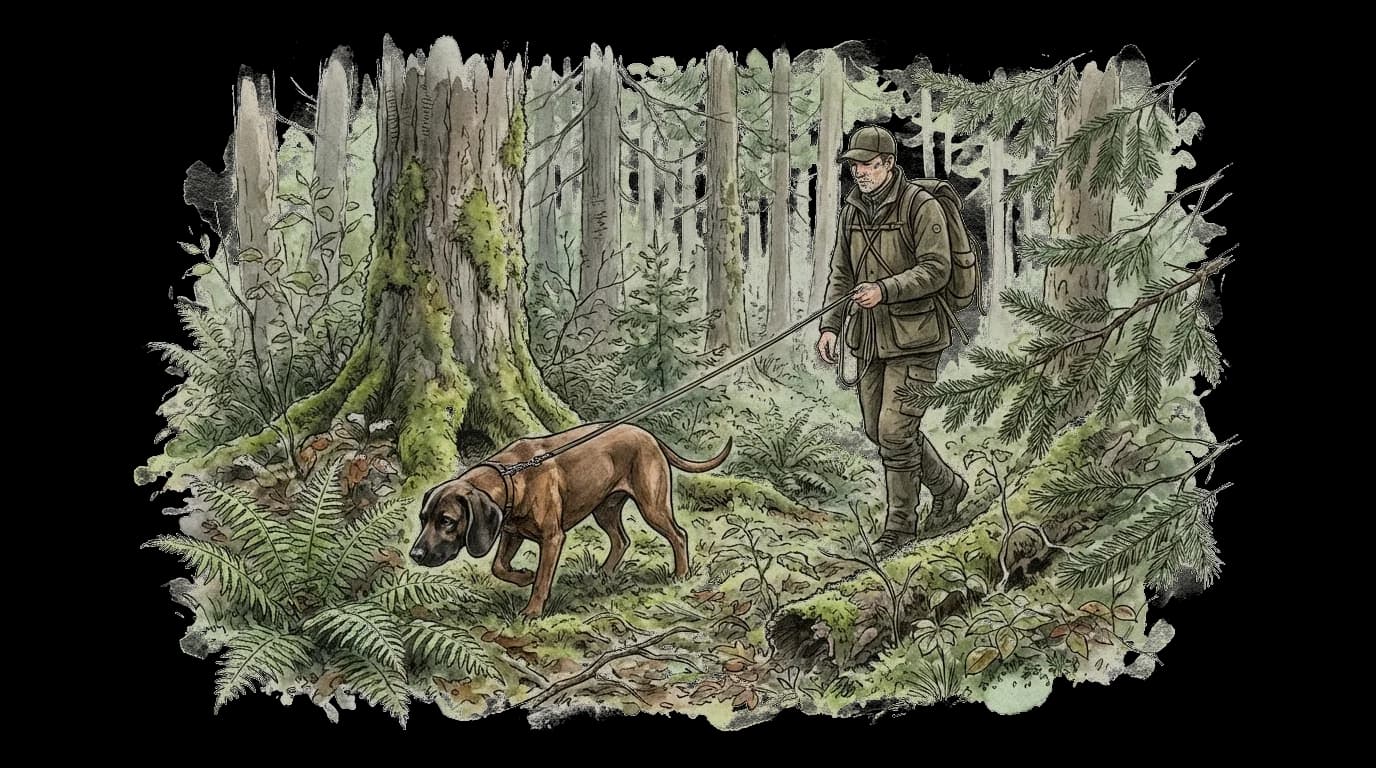
Tracking wounded game is the duty and technique of tracking and dispatching injured wildlife after a shot.
Tracking wounded game is a duty for all hunters. When you have fired and there is doubt about a hit, you must carry out a systematic search to find the animal.
The first step is to mark the shot site precisely. Use GPS, a pile of sticks, or a visible marker. Approach the shot site after 30 minutes (longer for gut shots) and look for signs: hair, blood, bone fragments, or stomach contents.
The color of the blood tells you a lot. Bright red blood suggests a lung shot, which is good. Dark blood may indicate a liver shot. Green or brown contents suggest a gut shot, which is bad. For gut shots, you should wait at least 4 to 6 hours before following the trail.
An approved tracking dog is required for big game hunting. The dog (Schweisshund, Bavarian Mountain Hound, Hanoverian Scenthound, or other approved breeds) follows the blood trail where the hunter cannot see it.
The hunting team must have access to an approved tracking dog with a handler. Many hunting teams have agreements with tracking dog networks in their area. Contact information should be ready before the hunt begins.
Tracking must be initiated immediately. If the animal is not found within a reasonable time, the municipality or wildlife management authority must be notified. It is a legal obligation to do everything you can to find and dispatch wounded game.
Relevant Species


Find Hunting Land
Create a free account and find hunting land across Norway.
Related Hunting Methods
Driven hunt
Driven hunt is a team hunt where drivers push game toward posted hunters. Most commonly used for moose and red deer in Norway.
Hunting with loose dogs
Loose dog hunting where the dog hunts freely and drives game toward the hunter. Used for moose, deer, and hare.
Stalking
Stalking is a quiet, individual form of hunting where the hunter approaches game to within shooting range.