Stand hunting
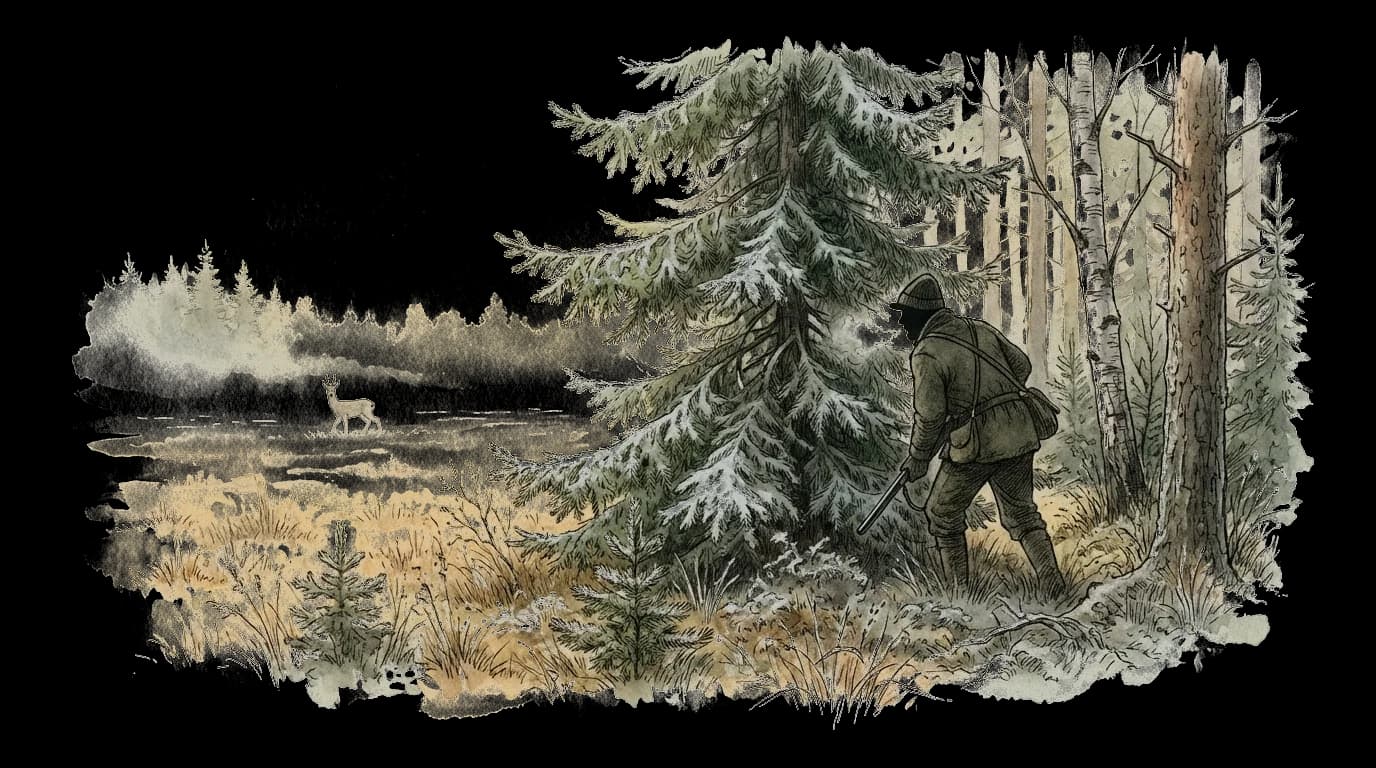
Stand hunting means sitting still at a strategic point and waiting for game to come to you.
Stand hunting is perhaps the most patience-demanding form of hunting. You position yourself at a point where you know game passes, and wait. It sounds simple, but sitting still for hours in cold and rain requires mental fortitude.
Good stand positions are found along migration routes, at salt licks, near feeding areas, or at transitions between forest and bog. Experienced hunters know their terrain and understand where animals move at different times of day.
Hunting towers and elevated stands provide better overview and reduce the chance of game detecting you. Wind is less critical from an elevated position because your scent carries above the animals. Many hunting grounds in Norway have permanent hunting towers on known migration routes.
Timing is crucial. Most cervids are most active at dusk: the first hour after sunrise and the last hour before sunset. Be at your post in good time.
Stand hunting is often part of a driven hunt, where posted hunters sit still while drivers move the game. But it also works well as an independent hunting method, particularly for roe deer and red deer in agricultural landscapes.
Relevant Species


Find Hunting Land
Create a free account and find hunting land across Norway.
Related Hunting Methods
Hide hunting
Hunting from a hide or blind, where you wait camouflaged for game to come within shooting range.
Driven hunt
Driven hunt is a team hunt where drivers push game toward posted hunters. Most commonly used for moose and red deer in Norway.
Stalking
Stalking is a quiet, individual form of hunting where the hunter approaches game to within shooting range.