Cage Trapping
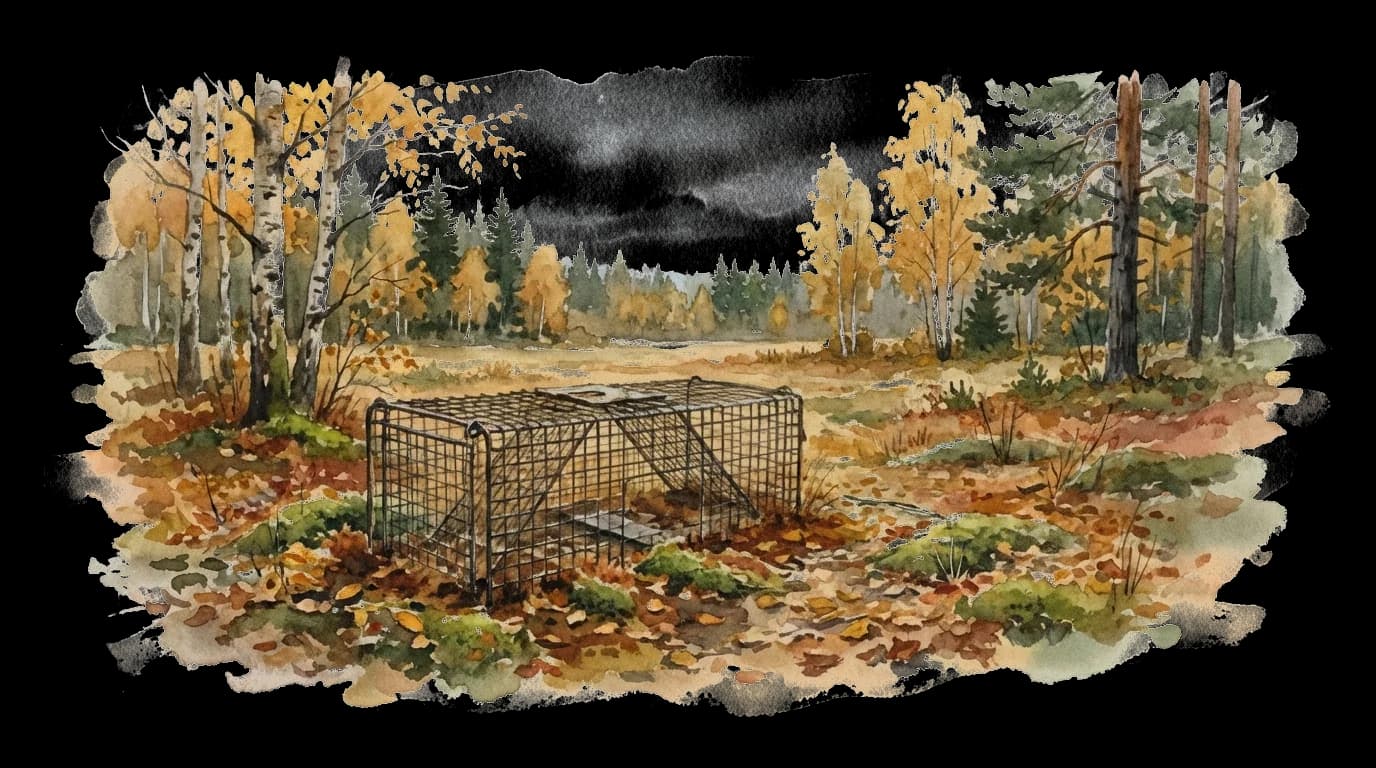
Trapping with cage traps for mink, pine marten, stoat, and other small predators.
Cage trapping is trapping with traps where the animal is caught alive in a cage. The method is widely used for mink, pine marten, and stoat, and is often the easiest starting point for new trappers.
A cage trap is constructed as a wire mesh cage with one or two entrances. The animal is lured in by bait or scent, and when it steps on a trigger plate or pulls the bait, the door closes behind it. The animal is held captive until the trapper comes for inspection.
The advantage of cage trapping is that the trap does not harm the animal. If the wrong species is caught (for example, a cat), the animal can be released unharmed. This makes cage traps especially suitable near residential areas.
Placement determines success. Mink traps are set along streams, riverbanks, shorelines, and rock piles where mink travel. Pine marten traps are often placed in trees or on building roofs where the marten has regular routes. Stoat traps are set in rock piles and along stone walls.
Bait varies by species. Fish and fish scraps are effective for mink. Eggs and meat scraps attract pine marten. Stoats are attracted to mice and small rodents. Many trappers experiment with different baits to find what works best locally.
The inspection requirement for cage traps is strict. In most Scandinavian countries, cage traps must be inspected daily. An animal sitting trapped in a cage is stressed, and prompt handling is necessary. Electronic trap alerts that send SMS when the trap is triggered make inspections more efficient.
Dispatching of animals caught in cage traps must be done humanely and quickly. Check local regulations for approved dispatching methods.
Cage trapping is a good way to start with trapping. The investment is low, the risk of bycatch is manageable, and the method provides good insight into wildlife behavior.