Kill Traps
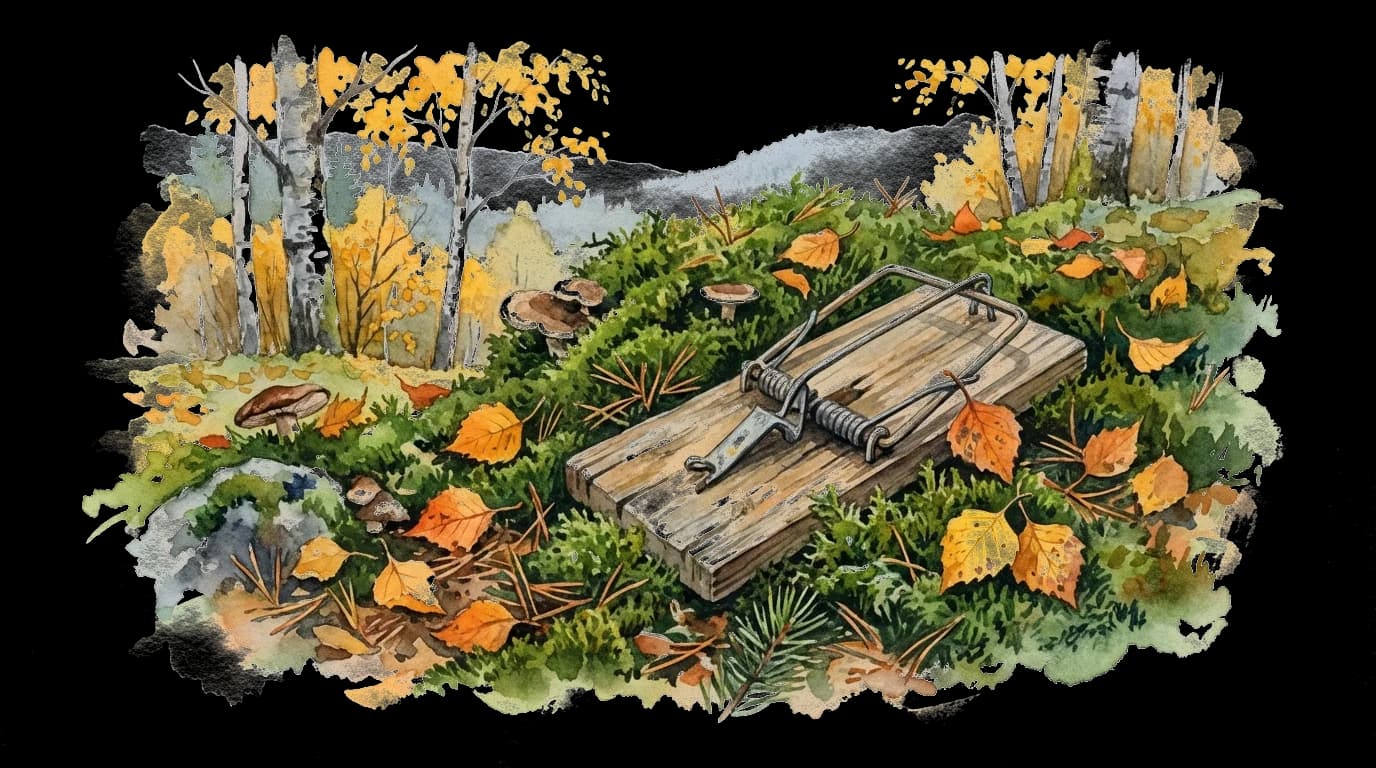
Conibear-type kill traps. Requirements for striking force, placement, and approval.
Kill traps dispatch the animal immediately through a powerful strike to the neck or chest. The most well-known type is the Conibear trap (named after Canadian inventor Frank Conibear), which comes in several sizes adapted to different species.
The principle is simple: the animal passes through an opening where two bows snap together with great force. The strike point is designed to hit the neck and head area and cause immediate death. Modern kill traps like the Goodnature A24 use a CO2 cartridge to power the striking mechanism and can be triggered multiple times without resetting.
Kill traps require precise placement. The trap must be positioned so the animal passes through it in the correct position. Incorrect placement can result in a hit on the wrong body part, which does not cause immediate death. Knowledge and experience are necessary.
Approval of kill traps varies between countries. In Norway, the Norwegian Agriculture Agency maintains a list of approved trap types. The trap must meet requirements for striking force, speed, and accuracy. Non-approved traps are illegal to use.
Trap size is matched to the species. Small kill traps (equivalent to Conibear 110) are used for stoat and similar. Medium (Conibear 160) for mink and pine marten. Large kill traps (Conibear 220 and up) for beaver and badger.
Kill traps can be placed in trap boxes that guide the animal into the trap and protect against accidental triggering. The trap box also prevents children, dogs, or other animals from triggering the trap. In many areas, use of a trap box is mandatory.
Inspection of kill traps is required, but intervals may be somewhat longer than for cage traps since the animal is dispatched immediately. Electronic trap notification makes inspection more efficient and ensures catches are recorded promptly.
Kill traps are the most effective trap type for controlling small predators and invasive species, and are used on a large scale along the Norwegian coast for mink control.