Trail camera
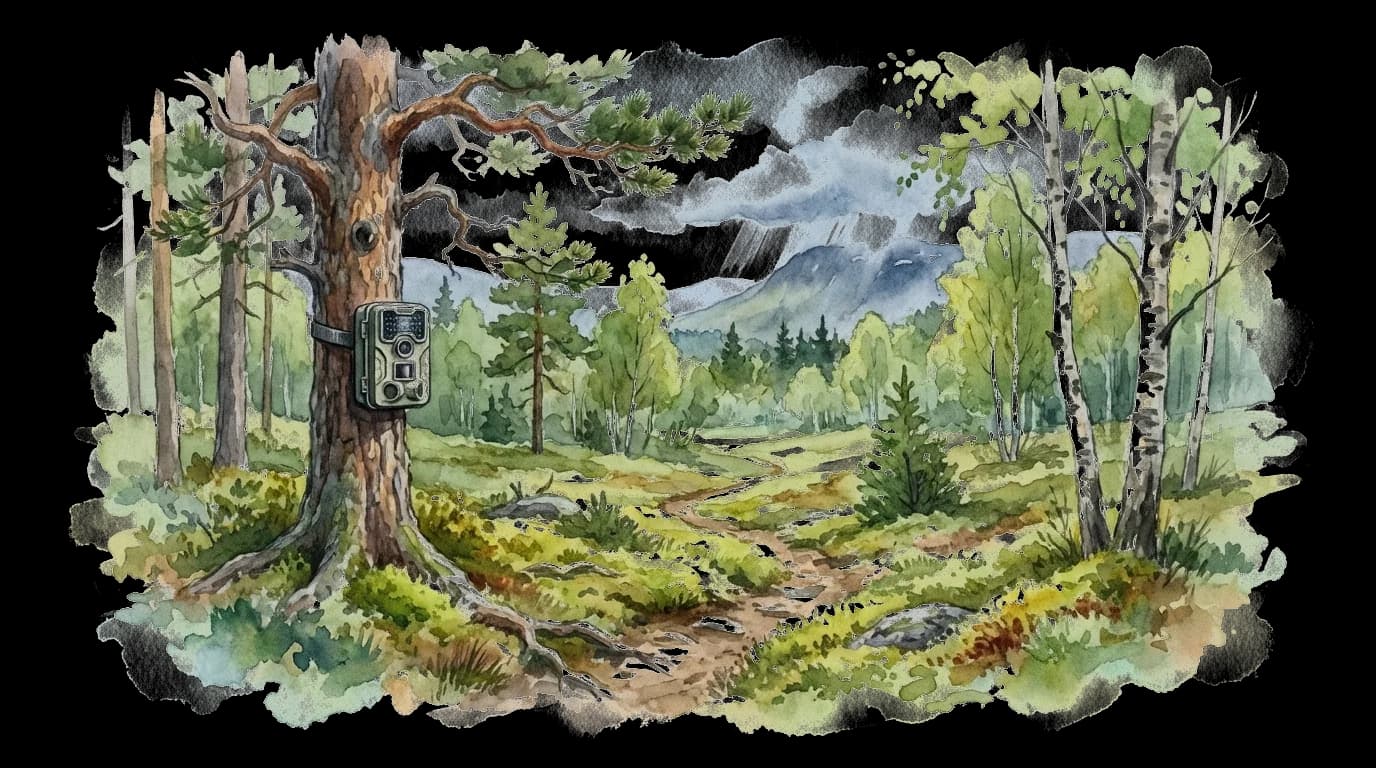
Trail cameras for wildlife monitoring and hunt planning.
Trail cameras (also called camera traps) take photos or video when they detect motion. They are useful tools for surveying wildlife populations and planning hunts.
Uses: Monitoring salt licks and feeding stations. Mapping migration routes. Documenting which species are present in an area. Determining when animals are active. Tracking bucks/bulls through the summer.
Features to look for: Trigger speed: Under 0.5 seconds to capture animals in motion. Image quality: At least 20 MP for good detail. HD video. IR flash: Invisible to wildlife (no-glow or low-glow). Regular white flash spooks the animals. Battery life: 6+ months on AA batteries or lithium. Cellular connectivity: Some models send photos directly to your phone via 4G. Convenient but more expensive.
Placement: 60 to 80 cm above ground. Aimed north or south (avoid direct sunlight which causes false triggers). On migration routes, along trails, at salt licks, or watering holes.
Brands: Reconyx and Browning are premium brands. Spypoint, Stealth Cam, and Bushnell offer good value. Avoid the cheapest options (slow trigger, poor night images).
Legality: Trail cameras are legal in Norway, but images of people may be regulated by privacy legislation. Set up cameras on your own property or with the landowner's permission.
Tips: Use SD cards with large capacity (32+ GB). Format the card in the camera (not on a PC). Check the camera regularly and replace batteries before they die.