Tracking Wild Boar
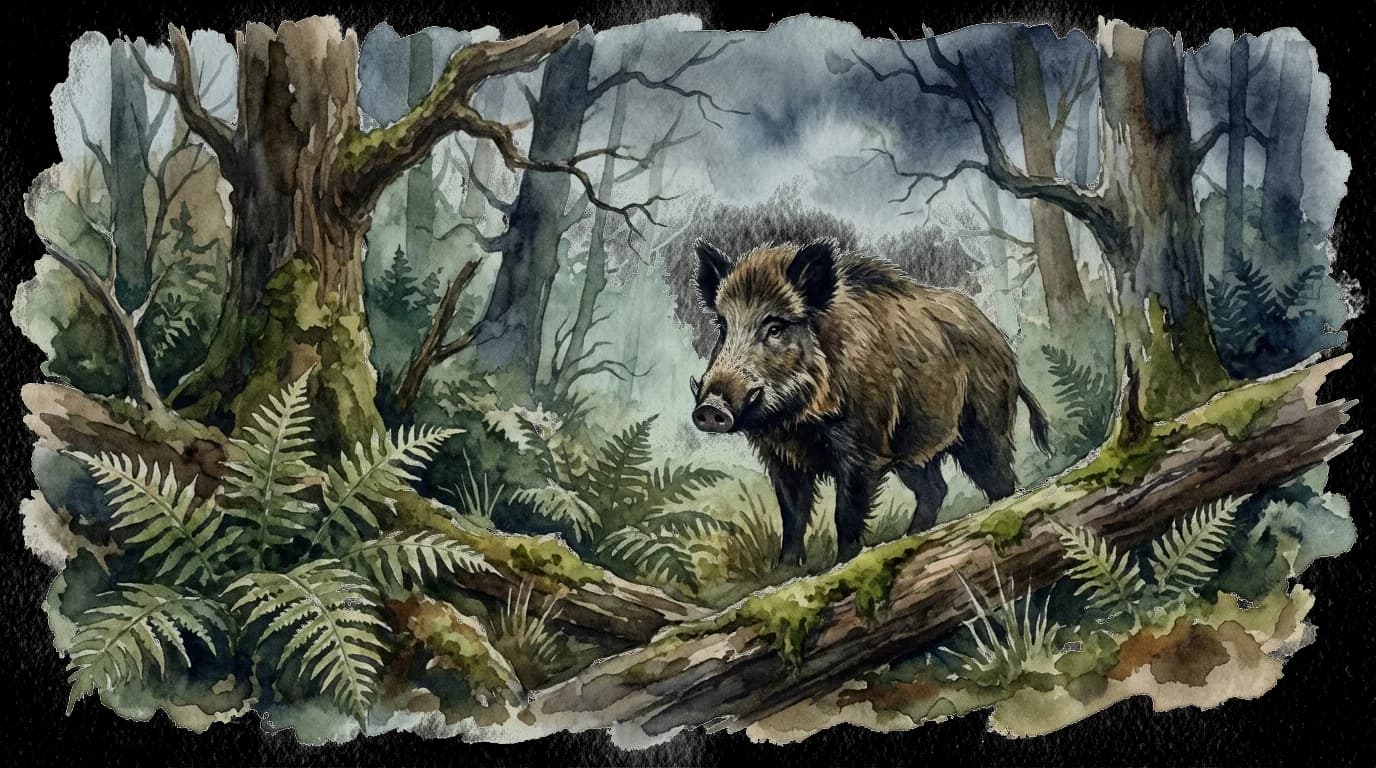
Special challenges when tracking wild boar, including behavior and safety.
Wild boar present special challenges during tracking. The species is tough, unpredictable, and can be dangerous to both dog and hunter. Tracking wild boar requires experience, caution, and good cooperation between hunter and dog handler.
The wild boar has a powerful body with a thick layer of subcutaneous fat and cartilage (the shield) over the shoulders. This means the bullet can be slowed or deflected, and hits that would be lethal on cervids are not necessarily so on wild boar. The shot site may show little blood even with relatively good hits.
A wounded wild boar can react aggressively. Unlike cervids, which flee, a cornered wild boar may turn and attack. Tracking dogs can be seriously injured by the tusks. Therefore, especially experienced dogs with protective vests are often used for wild boar tracking.
The blood trail from wild boar can be difficult to interpret. The thick fatty tissue can close the wound channel and stop external bleeding, even though the animal is bleeding internally. Wild boar hair is stiff and coarse, and can help assess the point of impact.
Wild boar are largely nocturnal, and many shots are taken in darkness (where night hunting is permitted). Tracking in the dark is especially demanding and requires good lighting and an experienced dog handler. Consider waiting until daylight if the situation allows.
Safety is especially important. Always have a loaded weapon available during wild boar tracking. Never approach a wounded wild boar without confirming it is dead. Approach from behind and observe carefully. If the ear hangs limply, the animal is likely dead.
Wild boar have spread significantly in Scandinavia in recent decades, and the need for competence in tracking this species is growing. Courses and experience exchange with Swedish hunters, who have a longer tradition with wild boar, are valuable.