Tracking Basics
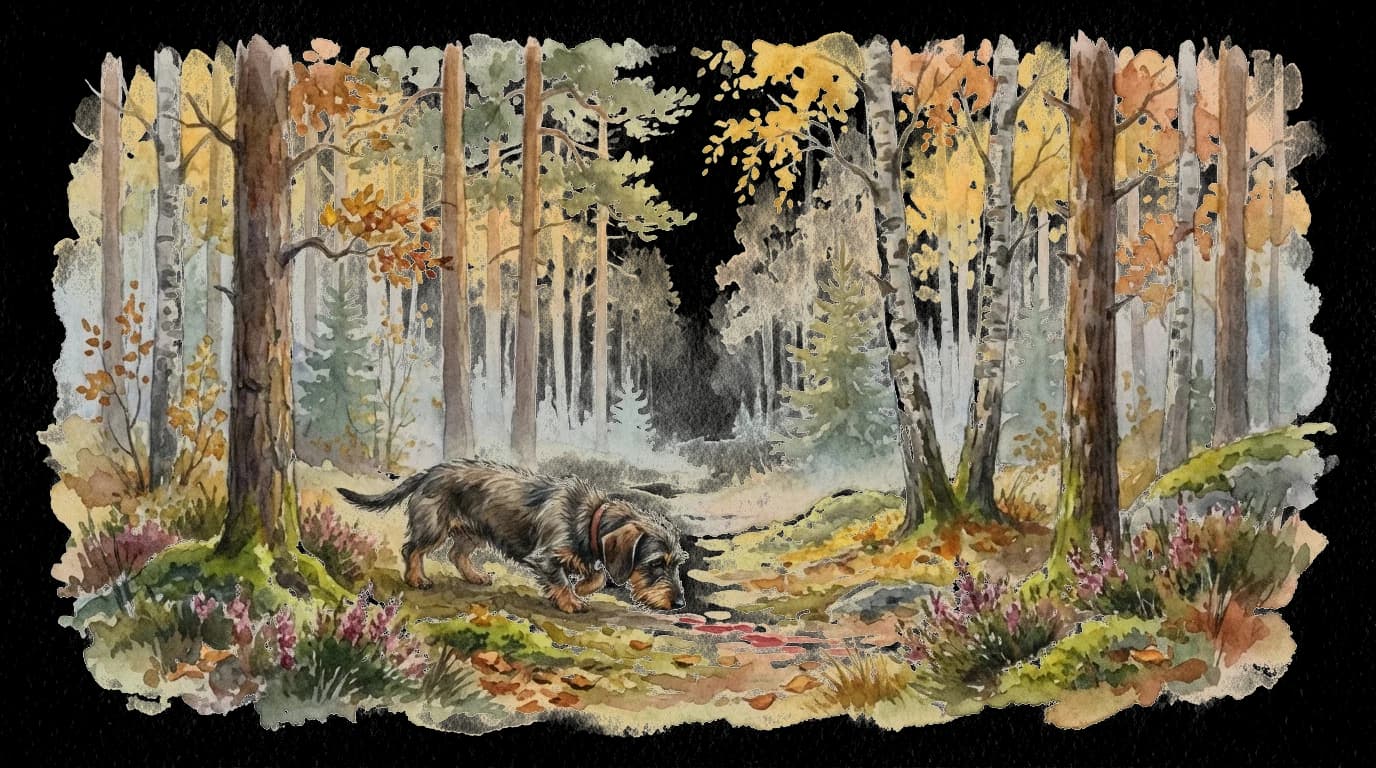
What is tracking, legal obligations, and why it is a central part of responsible hunting.
Tracking is the systematic process of following and finding game that has been shot or injured during a hunt. It is a legal obligation for all hunters in Scandinavia and a cornerstone of ethical hunting practice.
The obligation is triggered the moment a shot is fired at game. Regardless of whether you believe it was a miss or a hit, the shot site must be examined thoroughly. Many animals that appeared to have been missed turn out to be hit when the shot site is examined carefully.
The legislation in the Scandinavian countries is clear: the person who shoots at game is responsible for doing everything reasonable to find a potentially wounded animal. In Norway, this is regulated through the Wildlife Act and associated regulations. Sweden and Finland have corresponding provisions.
The time aspect is important. When a hit is suspected, the shot site should be examined within a short time, but the timing of the actual tracking depends on the type of hit. For a suspected lung shot, you can go to the shot site after 20 to 30 minutes. For a suspected gut shot, you should wait 4 to 6 hours to avoid pushing the animal further.
All hunting teams conducting big game hunts must have access to an approved tracking dog with a handler. Contact information for a tracking dog team should be ready before the hunt begins. Many areas have organized tracking dog networks with on-call rotations.
Tracking is not just about legal requirements. It is about respect for the game. A wounded animal suffers, and it is the hunter's duty to end that suffering as quickly as possible. That attitude should permeate everything we do as hunters.
Regulations vary between countries, and it is the hunter's responsibility to know the rules that apply in the area where they hunt.