Shot Site Examination
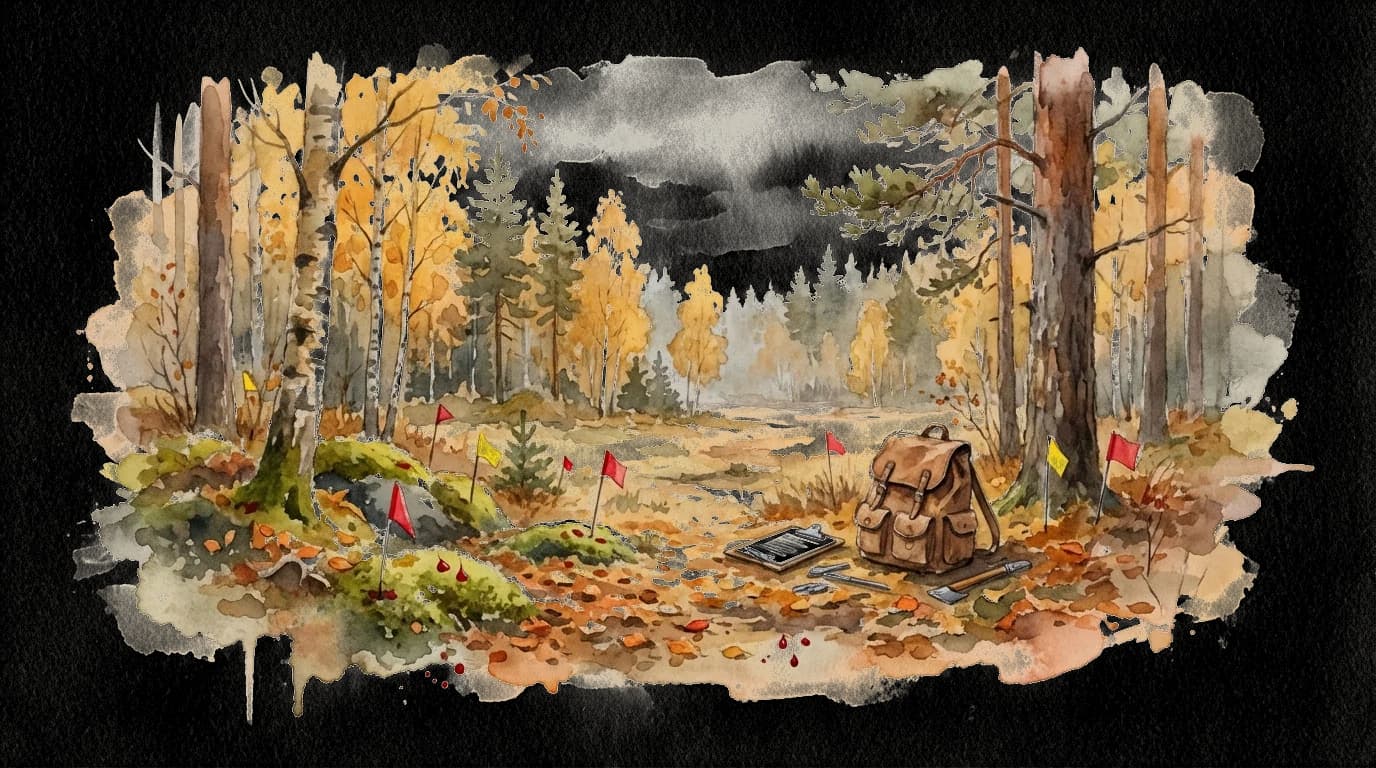
How to examine the shot site for hair, blood, and bullet signs to assess the hit.
Shot site examination is the first and most important step in any tracking operation. After the shot is fired, the hunter must mark the shot site precisely and examine it systematically for signs of a hit.
Start by marking the spot where you stood when you fired and the spot where the animal stood. Use GPS, sticks, paper, or other visible material. Then wait at least 20 to 30 minutes before approaching the shot site, unless the animal is lying in plain sight.
At the shot site, you look for several types of signs. Hair is the most common finding. Long, coarse guard hairs indicate a grazing shot. Short, fine hairs from the belly indicate a gut hit. White hairs from the chest may indicate a hit in the heart and lung area.
Blood is the most obvious sign. Bright, frothy blood with air bubbles indicates a lung shot. This is a good hit, and the animal has likely not gone far. Dark, thick blood indicates a liver or muscle hit. Greenish or brownish fluid mixed with blood indicates a gut shot.
Bullet signs in the ground can tell you about the bullet's trajectory. Look for impact marks in soil, rocks, or trees behind where the animal stood. If you find the bullet mark, you can assess whether the bullet hit the animal on its way through.
Stomach contents (partially digested food) at the shot site are a certain sign of a gut hit. With a gut hit, it is crucial to wait a long time, at least 4 to 6 hours, before following the trail. A gut-shot animal that is disturbed will get up and flee, making tracking much more difficult.
Document your findings. Take photos, note the time, and describe what you found. That information is valuable for the tracking dog handler who may be called in.
Practice makes perfect. Participate in courses on tracking and shot site examination where you get to see and feel different types of hair, blood, and signs.